
On campuses across the United States, energy drinks have become increasingly popular, receiving criticism from people who question their effects on health.
Despite this criticism, many students enjoy consuming energy drinks on a daily basis. However, many students remain wary of them.
Across campus, students are seen holding energy drinks of various flavors and brands as they work on their assignments.
Sonography sophomore Aubree Lincoln is one student who enjoys energy drinks from time to time.
“I usually drink Red Bull,” Lincoln said. “I wasn’t a big energy drinker before I started drinking Biggby Red Bull drinks, so they started making me like it.”
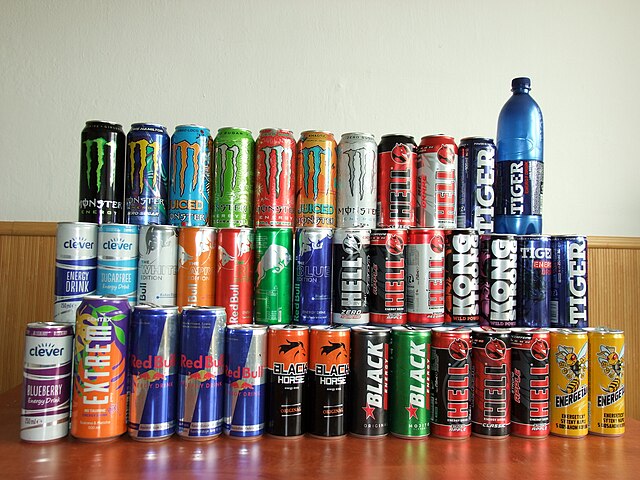
Although Lincoln enjoys drinking Biggby’s Red Bull mocktails, she admits that she doesn’t really experience any benefits from them.
“I don’t feel like it actually gives you as much energy as people think, but I feel like it does harm you,” Lincoln said. “Like a lot of people drink more than you are supposed to in a day, and it can affect your heart.”
Other students consume energy drinks on occasion as well, but don’t claim to be regular consumers of energy drinks.
Information security and intelligence freshman Jack DeBode talked about his experience with energy drinks.
“I have had them before when they were gifts,” DeBode said. “I did drink some when I was camp counseling this summer, just because I was sick and tired at the same time, so I needed something.”
For DeBode, energy drinks are nothing more than an occasional aid that can be useful in desperate times to save him from exhaustion.
Although DeBode has used energy drinks when given to him by camp co-workers, he mentioned that he believes they can also be harmful.
“I think they harm you just because caffeine in general quickens your heart rate and mind as well,” DeBode said. “One of my friends has a reliance on them, so without energy drinks, you can often tell there’s a difference in his mood.”
Automotive engineering technology junior Noah Gordon talked about his beliefs regarding energy drinks, including a more practical reason for largely avoiding them.
“It costs a lot more than water, and it’s not healthy,” Gordon said. “I usually don’t drink them, but I have had them in the past, usually whatever is cheap, or if I’m feeling tired, I’ll buy one, but it’s a rare occasion.”
The potential adverse health effects and savings resulting from not buying energy drinks are enough to deter Gordon from being a regular consumer of energy drinks.
Some students on campus are regularly seen consuming energy drinks, but that doesn’t mean they don’t believe the drinks may be causing harm.
Accounting sophomore Carinne Tarkowski is an occasional consumer of energy drinks, but likes to avoid them mostly because of her belief in their adverse health effects.
“I will drink them occasionally, like once a month, but not very often. If I’m going to drink one, it’ll be a Red Bull,” Tarkowski said. “[I don’t often drink them] mostly because of the sugar and health effects, and I feel like I already have a lot of energy.”
Tarkowski also talked about the effects she sees on the people around her as a result of consuming energy drinks.
“I know people that have caffeine addictions and rely on energy drinks for social situations, especially when they’re going to be somewhere with a lot of people,” Tarkowski said. “They’re like, ‘oh let me pound this energy drink so I can be sociable,’ and I’m like, ‘oh, okay, maybe go get eight hours of sleep.’”
Almost all students have had experiences with friends and other students being addicted to energy drinks, and some even see the drinks taking a toll on those around them.
Still, it is common to spot students with energy drinks all over campus, despite the knowledge of their detrimental effects on health being largely recognized.