
On Dec. 24, 2024, Ferris State University announced that it would be building a brand-new 22-million-dollar Jim Crow Museum in place of the old one.
The museum was originally established in 1996 and founded by Dr. David Pilgrim, who donated his collection of racist artifacts to the university.
The museum was later built and opened to the public on April 26, 2012, in the lower level of the Flite Library.
It all started with a simple conversation between Dr. Pilgrim, the Director of Diversity and Inclusion and Strategic Initiative, and Cyndi Tiedt, the collections manager of the Jim Crow Museum at Ferris State.
Tiedt and Pilgrim wanted something that people could interact with in the museum.
With the intention of bringing more impact and awareness to the history of what Jim Crow means, it was easier said than done.
“We realized that without growing this space in many different ways, the collection is just too large to be safely housed here.” Tiedt said.
She explained that a variety of people have reached out regarding things like tours and diversity training but they can’t do any of that because the museum isn’t able to fit much more than 15 people in the room.
She decided it was time to take action on the matter at hand, focusing not only on external changes but also on a rebrand of what the museum stands for.
She talked about how the focus of the current museum is directed towards hateful artifacts and anti-black rhetoric. Going forward, the museum will have a more holistic and celebratory focus, highlighting Black excellence and achievement.
“We realized this is our chance to not only take better care of the artifacts but to empower voices and landmark legacy as well,” Tiedt said.
She described that the work she is doing alongside Pilgrim stays the same, but the goal is to make the world a better place and evaluate what can be done to play a role in that process.
That isn’t all; there are more changes to come in the near future.
Students can look forward to seeing more interactive elements in the museum. Some key features include interactive timelines and an artifact explorer.
“It’s about getting more information about the artifacts to visitors’ fingertips in the exhibit,” Tiedt said.
She mentioned that the main purpose of the museum is to help people navigate tough discussions on the matter.
But it doesn’t stop there; the museum was designed to get people thinking critically about the past and how it’s relevant today.
“I want people leaving with the understanding of what actually happened and how did we get this far, but more importantly, what can we do now to make a change?” Tiedt said.
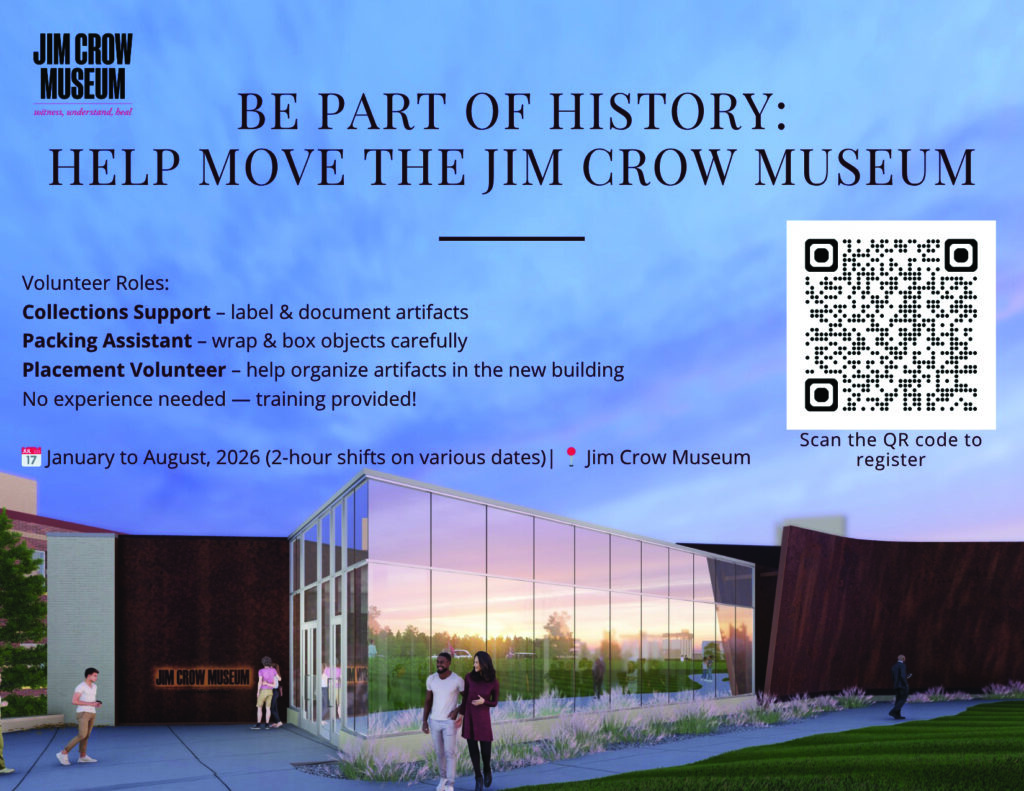
Students who are interested in getting a chance to explore the museum in more depth can get hands-on volunteer experience, helping the museum prepare to move.
All volunteers are trained on the day and will have staff or other student employees to help them out.
Students can benefit not only personally but also educationally.
“We’ve run the volunteer program for three weeks now, and the thing I’ve noticed is that it’s giving students hands-on experience with museum work,” Tiedt said.
She was impressed with the conversations being had while packing up and mentioned how the discussions were organic and authentic in regard to the impact that this history has on students’ personal lives.
In her words, students are guaranteed to have fun and maybe even make friends while learning.
More information regarding updates and volunteering opportunities will be available via the Jim Crow Museum’s website.