
Every student knows the feeling, being two weeks into a semester, enjoying your new classes then suddenly you can’t do an assignment because you forgot to pay $180 for a textbook.
It happens every semester, there are new classes, new schedules and my personal favorite, new textbooks.
Textbooks are one of the biggest add-on costs to college. Materials that are required to successfully complete your courses are locked behind a paywall. Every semester, hundreds of dollars go to books that you won’t read after four months. It’s a constant cycle of buying new books and just forgetting the old.
The problem is that they aren’t just expensive, they are required. When a professor lists a course material as “required,” it means students must either buy it or risk failing their class.
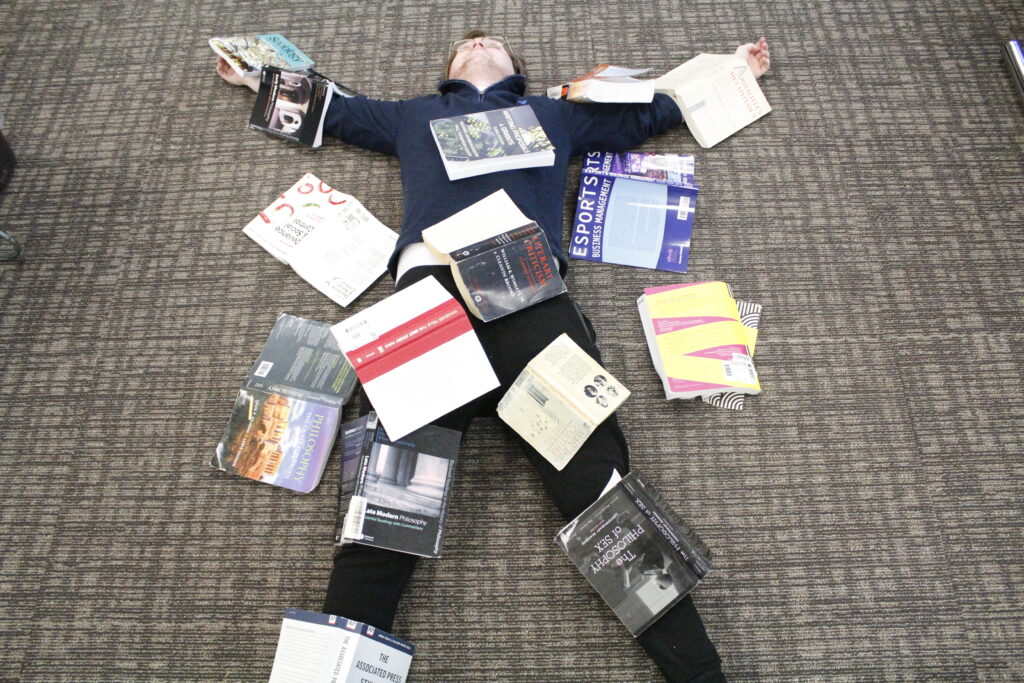
In classes that use a digital access code for the majority of homework and assignment your entire grade is dependent on you paying extra for a class you’re already paying for.
The majority of these access code courses are owned by a small group of major publishers like Pearson, Mcgraw Hill and Cengage. They have the market cornered and they show it by releasing new editions of textbooks with minor changes to the old. This means textbooks are constantly being labeled as outdated and students are always forced to the newest, most expensive edition.
There are drawbacks to both buying paper and electronic versions of your textbooks; both are costly and useless after the semester is over. Physical books can often be resold at a fraction of what you purchased it for but there is no way to get your money back from e-books. It’s weird to spend hundreds of dollars on things you use so little.
The weight in the cost of textbooks is felt unevenly among students. For some students, selling out an extra few hundred is just an inconvenience; for others, it is a serious obstacle in their education.
Your entire academic career could be in jeopardy because you can’t pay more than what you were already told you needed to.
Textbooks have become negotiable. Students wait to see if the required materials are really required before actually purchasing the book.
College demands a lot from students time, focus, effort and financial commitment. Adding other unpredictable expenses like textbooks only increases stress and financial strain on students.
Unlike tuition costs, which are clearly outlined, textbook costs vary and often feel like added hidden fees that only appear after schedules are finalized.
Education is designed to level the playing field, but when students must measure their academic success against their bank account, that design falls apart.
Colleges can’t claim they care about creating opportunities for students while ignoring the financial barriers that extend beyond tuition.
Transparency about textbook costs could help students plan more accurately for the semester ahead. Encouraging departments to consider price when selecting course materials can also help lessen the financial burden on students. Small policy shifts could mean the difference between someone failing and passing a course.
The issue is not just the prices of textbooks, it’s the priority of them. When required materials are treated like non-essential add-ons that should be purchased out of a student’s pocket, the message to students is clear: figure it out yourself.
Education should be challenging to students intellectually, not financially. The purpose of college is to push students to think critically, problem solve and grow, not drain their bank account.
If institutions want to make education truly accessible, colleges should help students confront the full cost of attendance, otherwise education is only for those who can afford it.