
Jess Oakes | Guest Contributor
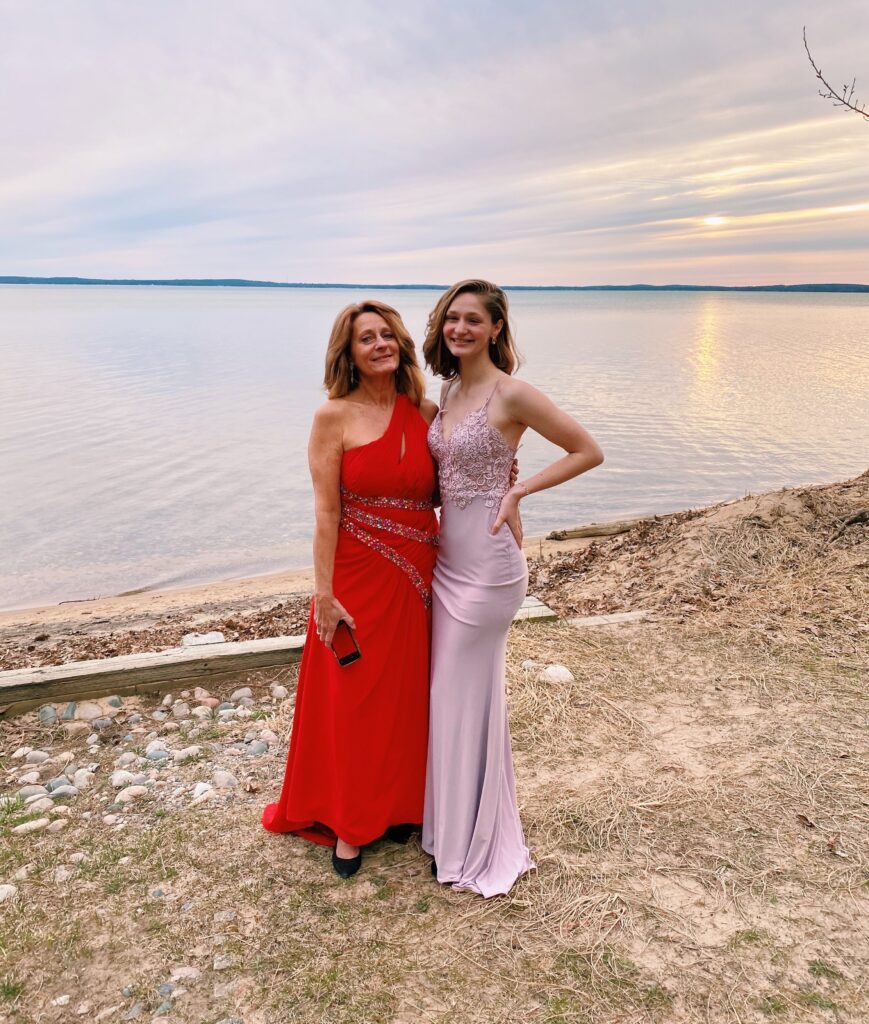
The greatest compliment I get is that I am just like my mom. She is smart, selfless, hilarious, gorgeous, strong and she hates every photo that has ever been taken of her.
Of course, it is awful for anyone to feel that way, especially surprising for a woman who has been compared to Barbie as much as my mom has, but just look around.
My mom graduated from high school in 1981. She probably only has yearbook and prom photos from her teen years. I was born in 2002 and my phone is embarrassingly full of pictures of me, as if I might forget how asymmetrical my face is or how flat my chest is without weekly proof.
Why do I feel the need to document those things? Maybe because I can hardly go a few hours without a commercial telling us to reach self-actualization with Botox, or suggesting that weight loss injections could help us love ourselves again.
Sometimes I want to believe that it is great for women to be able to choose what they want to look like and how they come into that image. I also want to keep in mind that so many differences between men and women are manufactured, remembering that any kind of person can struggle with body image. In the 2020s, the numbers regarding cosmetic enhancements do not comfort me.
Carolina Cosmetic Surgery statistics state that women made up 83.9% of worldwide plastic surgery patients in 2024. Simultaneously, women made up only 19% of membership in the American Society of Plastic Surgeons.
According to FAIR Health, women have been prescribed GLP-1 peptides such as Ozempic for weight loss at higher rates than men since 2021, now at a rate of 2-to-1. Flip that ratio around, and you have the gender makeup of the executive management team at Novo Nordisk, the pharmaceutical company that owns both Ozempic and Wegovy.
Just like in the makeup and anti-aging skincare industries, I see a small group of men whose salaries are secured by the endless stream of things women should hate about themselves.
Maybe the biggest culture shock of living in Tampa, Florida, after 21 years in rural Michigan is the beauty standard. This is one of the nation’s top ten cities for plastic surgery, according to 10TampaBay, and it contains the highest concentration of matching athleisure sets, according to the view from my window.
There is a sea of spreadsheets and six-packs outside my door. It is 80 degrees. Most people I know have access to a pool or can easily drive to one of the best beaches in the country. We are also spiritually upwind from Miami, which is clearer every day. All this to say that people here really care about what shape and size they are, from the gap in their thighs to the bridge of their nose.
I may live in a hotspot, but this is not exclusive to high earners in trendy coastal cities. Even in Big Rapids, anyone could drive downtown to Embry & Co. for soft tissue filler, Botox, or a consultation for prescription Zepbound injections.
For the record, these cosmetic enhancements are in no way as invasive as plastic surgery procedures. I have no judgment for the women who do partake or the female owners of a seemingly successful small business. Still, the fact that there is a market for this in a college town on the Muskegon River is a huge sign of the times for me—like seeing a residence hall on Top Taggart Field.
Dr. Rady Rahban, a board-certified plastic surgeon in Beverly Hills, described some of his observations on an episode of The Psychology of your 20s.
“More than ever before, younger and more patients are coming in to get surgery. Why is that? Social media. The end,” Dr. Rahban said.
He explained that the specific requests made by young patients are changing, and referred to several anti-aging and body recomposition procedures.
“We’ve always had younger people having surgery… It wasn’t crazy to get a nose job, but this idea of Bella Hadid’s cat eyes, lip lifts, mini-facelifts, BBLs, lipo, fat transfer, rib remodeling. There are some crazy things getting done, and they are getting done younger and younger.”
We have every right to change our bodies with braces, hair removal, makeup, weightlifting, or even surgery. My teeth did not grow in straight and I would not stand for that any longer once I got to high school. But when I see celebrities shrinking and picture how flat my own stomach is in my tight shirts, I have to ask who I want to make myself smaller for. I did not learn about protein ratios and progressive overload in the gym just to be weak. The girlboss commercials will not tell you this, but the National Institutes of Health reports that “in some studies, reductions in lean mass range between 40% and 60% as a proportion of total weight lost” on GLP-1s.
Lean mass is not the pouch of fat that nearly all women have below their belly button. It is not our double chin when we look down at our phones. It is the muscle we will need to stay mobile and healthy when we are 70 years old and risk death in any fall.
The celebrities we want to look like now looked entirely different one year ago. Different body parts and proportions were trendy 10 years ago. I have no idea what will be expected of us tomorrow, but I will never allow pharmaceutical giants and marketing teams to convince me that my squinty eyes, downturned nose, sharp jaw, A-cups, or stretchmarks are anything they need to fix for me.