
Many people are familiar with the state bird or animal, but what about the state duck?
As of March 28, Michigan has a new state symbol. Gov. Gretchen Whitmer has named the wood duck the official state duck of Michigan. This designation adds a new symbol to the state’s identity, one that reflects Michigan’s natural beauty and deep connection to wetlands.
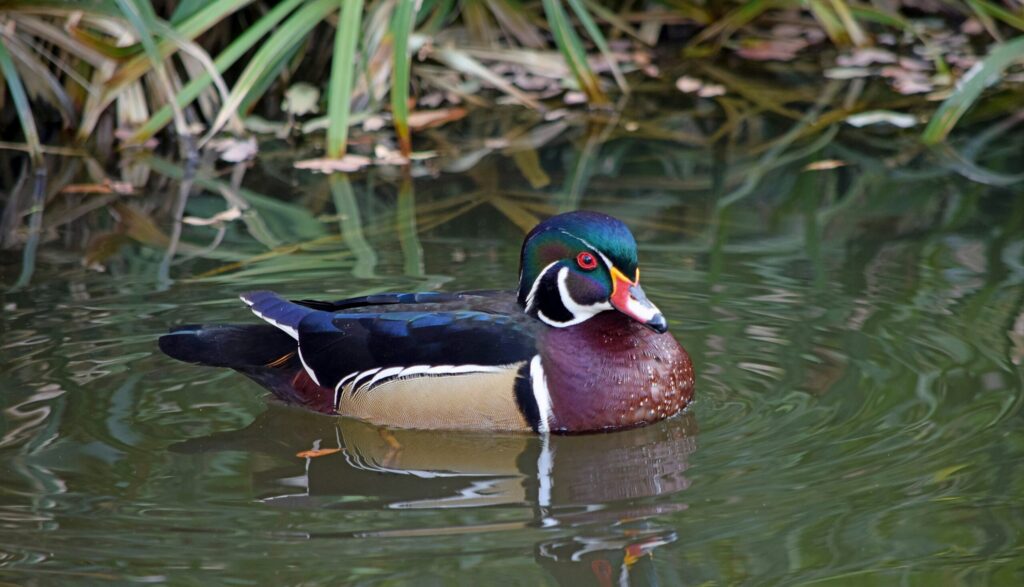
Wood ducks are colorful waterfowl known for their distinctive green crests and chestnut colored feathers. They typically live in wooded wetlands, marshes, rivers and swamps where trees overhang the water.
Wood ducks are incredibly important to the environment and play a significant role in wetland ecosystems.
Professor Joseph Lipar, in the biology department at Ferris State, explained the importance of wood ducks and their role in the ecosystem.
“Wood ducks can help to maintain biodiversity within their ecosystems through the transport of seeds to new areas after consumption,” Lipar said. “They will also eat insects and other small aquatic invertebrates and because of this, they can play a role in the control of insect populations.”
However, unlike many other duck species, the wood duck nests in tree cavities, meaning it relies on forested wetlands to breed. This reliance on specific nesting conditions, as well as overhunting, led to the species’ near extinction in the late 19th and early 20th century.
Lipar also explained the changes wood duck populations have undergone in the last century.
“In the early 1900s, the overall number of wood ducks was very low nationwide, to the point that they were in some danger of going extinct,” Lipar said. “Since that time, the number of wood ducks has increased, mostly due to the use of artificial nesting boxes and the preservation of natural nesting sites in large trees.”
Wood ducks are considered a conservation success story. Their populations rebounded in the 20th century, thanks to restoration efforts and the introduction of nesting boxes, demonstrating the positive impacts of environmental conservation.
The wood duck is a symbol of Michigan’s wetlands, forests and wildlife. This designation gives Michigan residents a new way to recognize and take pride in the state’s natural beauty.
One Ferris student who is particularly excited about the wood duck’s new status as a state symbol, construction management sophomore and Ducks Unlimited member William Somsel, shared his feelings.
“To me, the wood duck represents the Michigan duck hunter. It’s a very unique duck, and it matches this state,” Somsel said.
The wood duck not only symbolizes Michigan hunters, but also the land’s natural beauty.
“The wood duck is my favorite duck,” Somsel Said. “The wood duck is one of the most beautiful and satisfying birds to hunt.”
For others, the designation may be less about hunting and more about recognizing Michigan’s natural beauty. By officially naming a state duck, Michigan is creating an opportunity for people to be more aware of the wildlife around them and the ecosystems that support it.
“I think the wood duck symbolizes how Michigan stands out amongst other states for creating its own normal and having a special kind of beauty,” Somsel said. The new status will hopefully spread awareness of the history of the wood duck and hopefully will inspire new generations of waterfowl lovers.”
The addition of a state duck may seem like a small, nonessential change, but it carries a much larger message. It reflects a growing awareness of environmental issues and the value of maintaining the state’s natural resources.
Where viewed as a cultural symbol, a conservation success story or simply a visually striking bird, the wood duck now has an official place in Michigan’s identity. The designation serves as a reminder of the state’s rich natural landscape and the roles of both people and policy in protecting it.
So the next time you see a duck with a shiny green head and brown chest, remember that that little feathered guy is a symbol of Michigan.