
April 10 and 11 marked two major events for historical endeavors on campus, as the Shoah Committee and the historical honors society Phi Alpha Theta each provided an opportunity for students to learn and engage in discussion.
On Friday, April 10, 10 students across different majors signed up to attend the Shoah Committee’s annual trip to the Zekelman Holocaust Center. Saturday, April 11, Phi Alpha Theta hosted a Regional Conference at the FLITE Library, where students were able to present the work they have created throughout the semester.
During the visit to the Zekelman Holocaust Center, students had the opportunity to explore exhibits that detailed personal stories of Holocaust survivors, offering a more personal understanding of the events discussed in class. For many attendees, the experience was both educational and deeply moving.
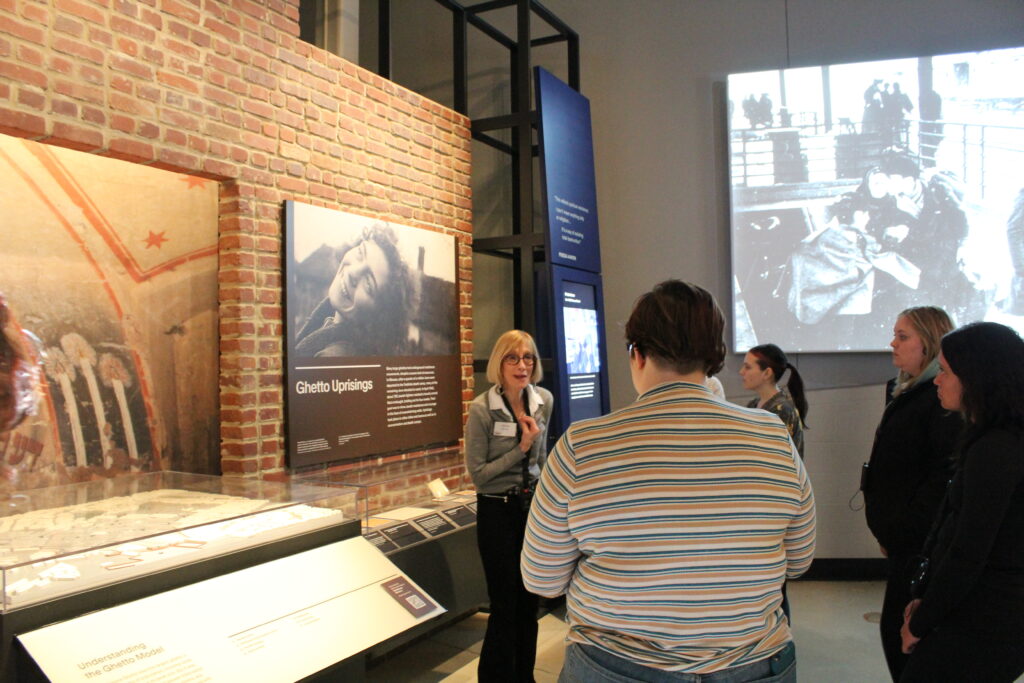
One student, junior in the history program, Kayla Wittkop, was able to attend the trip to the museum and also presented her paper at the Regional Conference. Her topic was centered around the brutal reality that Jewish women in the Holocaust faced, and she chose this topic to shed more light on it, as it isn’t researched enough.
Wittkop talked about how the trip to the Zekelman Holocaust Center essentially reaffirmed everything she had been writing about in her paper. One of the things that really stuck out to her was how many people assume the Holocaust started when World War II began, when in reality, it started in 1933.
“My paper was about Jewish women in the Holocaust and what they did in order to survive and what happened to them during said time,” Wittkop said. “I still say the Holocaust is my favorite topic to research. While everybody else says that it’s a little bit heavier, I think so too. It is heavy, but you have to look at it as people are telling this, so it doesn’t get repeated, or people don’t have the same mindset.”
Wittkop contrasted traditional classroom learning with the immersive experience of the museum visit. She explained how the interactive nature of the trip made the material feel much more impactful than a typical lecture setting.
“I personally like to learn hands-on. I like reading through things and researching things, but if we’re wandering around, looking at things, talking about things, that helps me get a little bit more understanding and I can recall it better.”
While students like Wittkop experienced the conference firsthand, the event itself was made possible through the efforts of student leadership in Phi Alpha Theta.
Junior in the history program, Jaden Harris, and acting president of Phi Alpha Theta, played a key role in organizing the Regional Conference held at FLITE Library.
Harris, along with sophomore in the history program, Caitlin Power, worked together to ensure things went smoothly and set up all of the collaborative efforts for the Regional Conference.
Harris described how the decision to host fell on them quickly and how she and Power really stepped up to the plate.
“Oakland University hosted the Regional Conference last year and we attended and knew we could do something great like they did,” Harris said. “Our original plan was to host in the spring of 2027. That would be my senior year and her [Power] senior year and it would have been under my full role as president, so it would be like a magnum opus, but there was kind of a scramble for who was going to host this year. Originally, Grand Valley was going to do it, but things didn’t work on their end, so we decided to put it on.”
With little time to prepare, Harris said the planning process was condensed into just a few months.
Power also explained how the short timeline served as a challenge, especially when it came to collaborating with other schools.
“It was a lot of our work and our time that went into it, so it was a lot on us to get all of that together,” Power said. “I emailed over 65 schools across three states, Michigan, Indiana and Ohio. I heard from fewer than 20 and then only six of them were able to show.”
Faculty advisers also played a role in supporting students throughout the planning process and the conference itself.
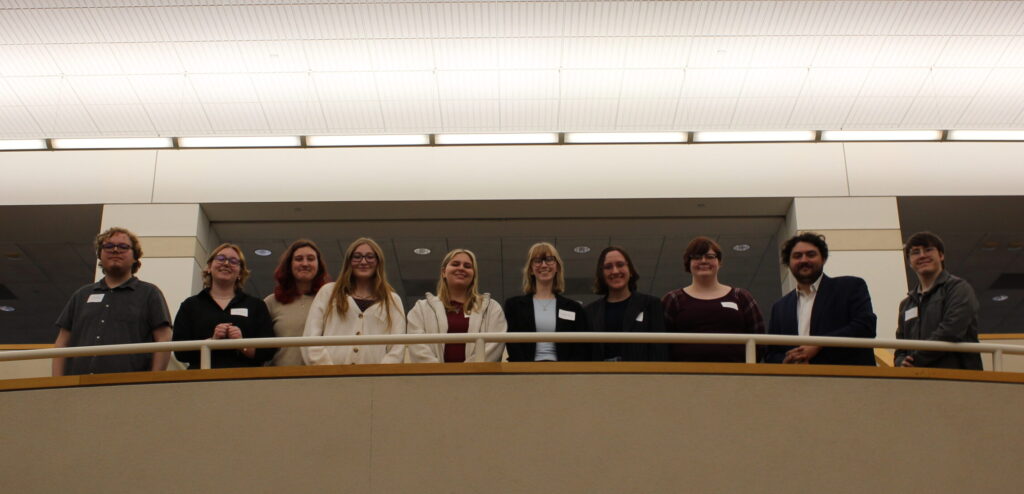
Dr. Tracy Busch, one of the faculty advisers for Phi Alpha Theta, said the conference was a major undertaking for students. She mentioned how, when the students came to her and said they wanted to take on hosting the conference, she asked if they were sure they wanted to take on the responsibility.
She was nothing but proud of the work the students did in putting on such a professional-level event.
“We are a leading university in Michigan, because we are hosting this Michigan Regional Conference, so I’m really proud of our program, proud of our students, thankful to everybody who chairs our panels, including our own history professors here,” Busch said. “I am just really grateful for how good it makes our students look, how good it makes Ferris look and how well it’s gone so far.”
Beyond the logistics and planning, both events highlighted the importance of engaging with history in meaningful and personal ways.
Busch also emphasized the importance of the conference in giving students real-world academic experience.
“You can really see the camaraderie between students in the way they ask questions and engage with each other’s work. It’s the nitty-gritty of history, really analyzing sources and interpretations and it creates a real community of historians, not just at Ferris, but across Michigan.”
Together, the museum visit and the Regional Conference gave students opportunities to engage with history beyond the classroom through research, discussion and reflection. For many, the weekend highlighted not only the academic study of history, but its real-world significance and lasting impact.